


One of the workshops at this year’s SECA Annual Gathering looked at plans for devolution and local government reorganisation in Sussex and Hampshire and how community groups can work together to encourage our new authorities to prioritise climate and nature. This blog by Sally Barnard outlines the discussions that took place
Devolution/Local Government Reorganisation in Sussex and Hampshire
Despite the best efforts of campaigners, our new Mayors and Unitary Authorities will not have any duty to plan for the climate and nature crises. This seems a huge missed opportunity. In the current political landscape it risks council progress on climate action slipping back or even being abandoned.
With this in mind, around 15 of us gathered for a discussion on how community groups in Sussex and Hampshire can work together to build public pressure on our future Mayors and Unitary Authorities. How can we influence them toward making climate and nature a priority?
Introduction
We started with a quick summary of the situation and the timetable for how the changes will take place.
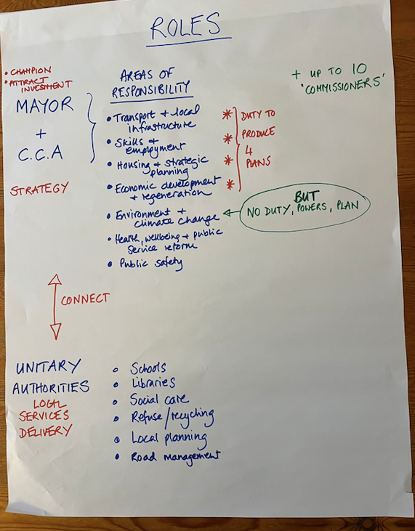
Through devolution, central government gives powers, funding and duties to Mayors to work strategically for their region. Through Local Government Reorganisation, new Unitary Authorities will be created to replace county, district and borough councils and deliver their services.
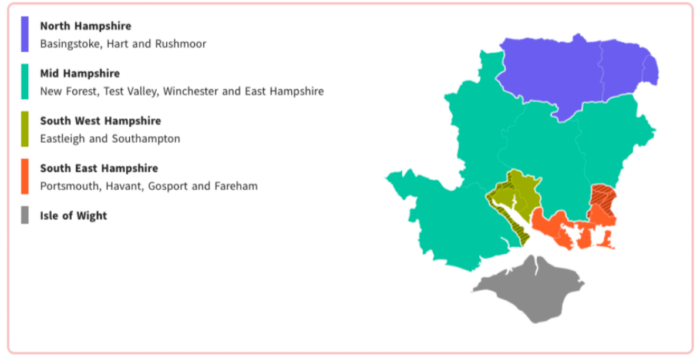
In Hampshire there will be a Mayor for the whole of Hampshire and the Solent, working with Hampshire and the Solent Combined County Authority (HSCCA). There will be five new Unitary Authorities.
In Sussex, there will be a Mayor covering the whole of East and West Sussex working with Sussex and Brighton Combined County Authority (SBCCA, also known as Sussex and Brighton Strategic Authority). The decision on Unitary boundaries has been delayed until the summer, but there are likely to be four.
HSCCA and SBCCA have now been set up. Unitary elections will follow in May 2027 and Mayoral elections in May 2028. The timetable for changes is outlined below. We have a window of opportunity over the next two years to influence the structures and plans that are currently being set up and make sure that climate and nature are embedded.
TIMETABLE FOR DEVOLUTION AND LGR ACROSS SURREY, SUSSEX AND HANTS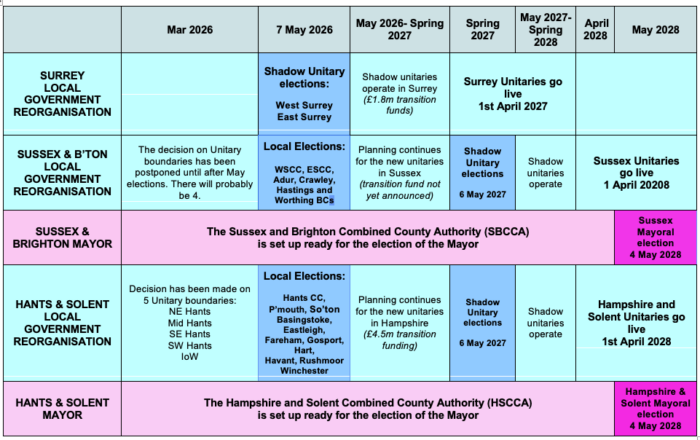
Outline of roles of Mayors and Unitaries:
So how can we influence this process? These were the discussion points from the workshop:
We need to organise in networks, our voice is much stronger together.
Devolution is focussing the need for countywide networks to give us a communal voice. In Hampshire, HCAN (Hampshire Climate Action Network) is well advanced in its organisation and has set up Voice for Climate and Nature as a rallying point for groups across their region. In Sussex a new network is emerging, Sussex Climate And Nature Network (SCAN). This is currently operating as a WhatsApp group, and is in the process of organising. If you or your group are based in Sussex and would like to join please complete this members survey and you will be added to the group.
Other points made about networking:
SCAN needs more in person meetings to create a common identity.
We might find that groups also form alliances around Unitary Authority areas. Or along catchments of rivers?
Many current groups don’t see it as their role to campaign or influence councils, that would need a change of mindset.
Networks need to widen our reach beyond climate and environment groups, to faith groups, WI, mums’ groups etc.
Local elections
We could campaign in local County Council elections this May to get climate friendly candidates elected – see this recent SECA blog for ideas. Although County Councils are on the way out, they will have influence over the structure of the new Unitaries as they are set up.
Who should we contact? Suggestions given:
Contact the new Combined County Authorities, ask to be put in touch with relevant officers or people on the board and arrange to talk.
Talk to our existing contacts especially County Councillors and officers and voice our concerns
Talk to candidates and newly elected County Councillors after the elections – we can support them too.
What should we say?
We need to work together quickly to come up with clear ‘asks’ (eg see Voice for Climate and Nature). The first step could be to make ourselves and our networks known to the new bodies and voice our concern that climate and nature will get left out of the new structures.
Possible initial asks:
That the Mayor appoints a Commissioner for climate and nature (the mayor is allowed to appoint up to 10 to give a focus on different issues)
That our networks are given funding by the Mayor/CCA, as we will be a help to them with public engagement.
That the Mayor adapts ready made guidance from elsewhere, eg see Scottish guidance below
Next steps for SCAN in Sussex
It’s early days, but a steering group is coming together and a website is being considered. We agreed that SCAN can learn a lot and borrow from HCAN.
Who can we learn from? Examples of good practice:
Excellent and clear: Scotland’s recent guidance to public bodies for their climate and nature duties;
Wales Wellbeing of Future Generations Act;
Hampshire Voice for Climate and Nature
Other useful links:
Hampshire and the Solent Combined County Authority – new website with good clear explanation of roles of the Mayor and CCA.
Detailed info on devolution and local government reorganisation from the LGA
Article on the need to empower town and parish councils from Local Policy Innovation Partnership
HCAN thoughts on how local groups might respond to LGR
With very many thanks to Cat Fisher from SCAN, Chris Holloway from HCAN and Mona Soussi-Tafraouti from Friends of the Earth for leading the workshop.
Sally Barnard, SECA